Domestic voilence - A simple tag. This tag can easily be put on any victim's face. Oh ! She is the victim of domestic voilence. But to know the exact story and the sufferings behind this tag is really very hard. Women - educated or uneducated , one way or the other way is facing such thing in our society? This question is really very serious. Our intellectual people say in the meetings, public gathering and stages " Why she is not telling the story to the sensitive World?" " Why she is mum over the issue?" " There are so many laws to protect a women. So many helplines, so many NGO's etc etc".
But the same intellectual people and sensitive people say in their personal life after hearing XXX story of XXX woman " She must be of loose character. That is why her husband or in - laws are beating up? Oh ! She is working in the office, then definately she is coming late to her house etc etc".
Definately there are so many laws , so many help lines but are these laws really helpful? Making these laws is easy but the implementation is difficult. If any woman is suffering, the next doors people know everything but no body come forward. Parents never support their daughter as they feel ashamed of the society.
If one way or other, a case is registered, a woman is 1000 times mentally harrased by the so called protection agencies than she is being harrased by her in laws.
The alive victim of the domestic voilence is getting mental torture by both her in-laws and out-laws( follow up people after case registration).
In our society, a woman killed by her in-laws gets the immediate help and the culprits gets punishment . An alive woman waits for the action for years and years
Sleep , sleep sleep my little angel!
Your dream prince will come..
and take you to the Palace
with all your charming face,
Sleep , sleep sleep my little angel!
2009-10-02
Poor woman


2009-09-30
Akbar and Birbal
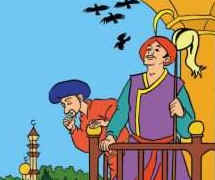
Akbar and Birbal stories are very famous and popular in India among all ages of people.
There was a Mugal Emperor in India, Akbar the Great (1542-1605). His full name was Jalaludden Mohammed Akbar Padshah Ghazi and he ruled India from 1560 to 1605. He himself was illiterate, but he invited several learned people in his court. Among these people, nine were very famous and were called "Nav Ratna" (nine jewels of the Mugal Crown) of his court. Among these nine jewels, five people were more famous - Tansen, Todarmal, Abul Fazal, Maan Singh and Birbal.
One such famous story :
Once Akbar asked Birbal to bring four fools of the first order to him. He said - "It is not difficult because this world is full of fools. Birbal said - "OK" and asked some time to find them, which Akbar readily gave to him.
Now Birbal started looking for fools. He was going somewhere that he saw a man carrying a large plate on which were kept some clothes, betel leaves and sweets. He looked like a fool to Birbal, so he asked him - "Where are you going to? And to whom you are carrying this?" The man replied - "My wife has remarried. Now they have a child so I am taking this gift for them." Birbal got convinced that he was a fool, so he considered him a candidate to take to the king.
At another time he saw a man riding a buffalo carrying a bundle of grass on his head. Birbal thought he was also a fool, so he asked him - "Why are you carrying this bundle on your head?" The man replied - "In fact my buffalo is pregnant, so I thought that she should not carry too much load, that is why I have put this bundle on my own head instead of putting it on it." Birbal considered him also a candidate to take to the king.
So next morning he took those people to Akbar's court and presented them to him as the biggest fools. "But these are only two fools; where are the other two? I asked you to bring four fools." King asked. Birbal folded his hands and bending a little said - "Jehaanpanaah, The third fool are you who asked me to bring the fools; and the fourth fool is me who has brought these fools for you."
When the king heard about them, he laughed a lot on their foolishness.
2009-09-28
Dusshera Celebrations at Remote Village (Billawar, J&K)
Thus Dussehra is not only a celebration of the victory of good over evil. It is also an occasion to pay homage of Rama.
The celebrations at Billawar(J&K). The pictures taken by me on 28-09-2009.


The celebrations at Billawar(J&K). The pictures taken by me on 28-09-2009.


Vijayadashami is the day of the Saraswati or the deity of knowledge and learning. Children begin their school education, their art lessons or their career planning on this day and seek their elders blessings. For Hindus Dussera is one of the four most auspicious days of the yea
2009-09-27
Upcoming Kumbh Mela
KUMB MELA

Kumb Mela in 1850
Kumbh Mela is a mass Hindu pilgrimage. It occurs four times every twelve years and rotates among four locations: Allahabad (Prayag) at the confluence of the Ganga and Yamuna and mythical Saraswati river, Haridwar along the Ganga river, Ujjain along the Kshipra river and Nashik along the Godavari river.
The Maha Kumbh Mela ('Great' Kumbh Mela) which comes after 12 'Purna Kumbh Melas' which is after every 144 years is also held at Allahabad .The 2001, Maha Kumbh Mela was attended by around 60 million people, making it the largest gathering anywhere in the world .
According to Indian astrology, it is celebrated when the planet of Brihaspati (Jupiter) moves into the zodiac sign of Aquarius or Kumbha . Each sites celebration dates are calculated in advance according to a special combination of zodiacal positions of Sun, Moon, and Jupiter.


Kumb Mela in 1850
Kumbh Mela is a mass Hindu pilgrimage. It occurs four times every twelve years and rotates among four locations: Allahabad (Prayag) at the confluence of the Ganga and Yamuna and mythical Saraswati river, Haridwar along the Ganga river, Ujjain along the Kshipra river and Nashik along the Godavari river.
The Maha Kumbh Mela ('Great' Kumbh Mela) which comes after 12 'Purna Kumbh Melas' which is after every 144 years is also held at Allahabad .The 2001, Maha Kumbh Mela was attended by around 60 million people, making it the largest gathering anywhere in the world .
According to Indian astrology, it is celebrated when the planet of Brihaspati (Jupiter) moves into the zodiac sign of Aquarius or Kumbha . Each sites celebration dates are calculated in advance according to a special combination of zodiacal positions of Sun, Moon, and Jupiter.

According to Paramahansa Yogananda in his work the Autobiography of a Yogi, it was on the Kumbha Mela in January 1894 at Allahabad that his Guru Sri Yukteswar met Mahavatar Babaji for the first time
In 2001, Kumbhmela was held in Allahabad. It is estimated that about 16 million people took a bath in the river Ganges on the occasion. It was extraordinary in terms of arrangement and discipline
The basic point of the Kumbh Mela is for pilgrims to bathe at certain sacred spots on certain auspicious days. A large tented city is erected and pilgrims stay at tents owned by Pandas (religious and spiritual guides) and at various ashrams. Others will just camp on the ground or turn up for the actual bathing day. Some of these bathing days are designated "royal," and it is on these days that the naga sadhus (naked mendicants) parade and bathe. On other days there will still be people bathing and other events and random processions
Upcoming Kumbh Mela
Haridwar (the gateway to God) will host the Purna Kumbha mela in the year 2010 (March-April)
The Purna Kumbha Mela will again be held at Allahabad (Prayag) in the year 2013 (January 27 to February 25)
Nasik will host the Ardha Kumbha Mela in 2015 (August 15 to September 13)
Ujjan Ardha Kumbh Mela 2016 (April 22 to May 21)

2009-09-25
Guru Nanak Dev Ji
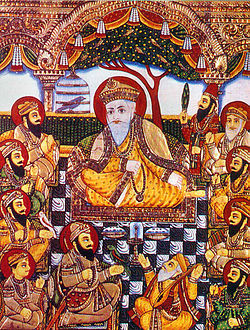
Guru Nanak's teachings can be found in the Sikh scripture Guru Granth, a vast collection of revelatory verses recorded in Gurmukhi.
From these some common principles seem discernible. Firstly a supreme Godhead who although incomprehensible manifests in a variety of religious forms, the Singular 'Doer' and formless source of all forms. It is described as the indestructible (without death) form and in both impersonal and personal forms.
Guru Nanak describes the dangers of the self (haumai- 'I am') and calls upon devotees to engage in worship through God's name[dubious – discuss] and singing of God's qualities, discarding doubt in the process. However such worship must be selfless (sewa). God's name cleanses the individual to make such worship possible. This is related to the revelation that God is the Doer and without God there is no other. Guru Nanak warned against hypocrisy and falsehood saying that these are pervasive in humanity and that religious actions can also be in vain. However the practice of satsang is considered exalted. It may also be said that ascetic practices are disfavoured by Guru Nanak who suggests remaining inwardly detached whilst living as a householder.
Through popular tradition, Guru Nanak's teaching is understood to be practiced in three ways:
1. Chanting the Holy Name and thus remembering God at all times (ceaseless devotion to God)
2.Earning/making a living honestly, without exploitation or fraud
3. Sharing with others, helping those with less who are in need
Kalayan Das Mehta, Guru Nanak Dev Ji’s father once sent the Guru to graze buffaloes in the pastures. While grazing the buffaloes, Guru Nanak Dev ji sat under a tree and started meditating on God. Meanwhile, the herd of buffaloes went into the neighboring farmer’s field destroying his crop. The farmer saw his crops getting damaged. He became furious and lodged a complaint with Rai Bular, the officer-in-charge of that area. Rai Bular came to inspect the fields, and to his astonishment, he found no damage was done to the crops; rather, the crops were blossoming. The place, at which this miracle took place, is known as Kiara Sahib.
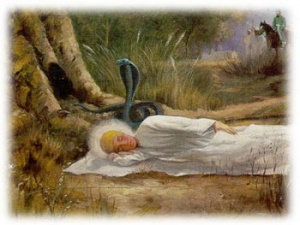
On another occasion, Guru Nanak Dev Ji was sent to graze the buffaloes in the pastures and he fell asleep under the shade of a tree. As the sun rose higher, the shadow moved away. The rays of the hot summer sun began to fall on his face. A big cobra came at that place and provided shadow with its hood over the face of the Divine Master. Rai Bular happened to be passing by that side with his attendants. When he saw this strange scene, he was convinced that Guru Nanak Dev Ji is not an ordinary man. God had sent him to this world. Rai Bular then touched the Guru's feet in great reverence and thus became his disciple.
Some of teachings are:-
1.Whenever people go astray God sends some great and admirable personalities to show the right path to society. India is the birth land of many famous religions- Sikhism is one of them. The word Sikh is derived from Sanskrit word shishya (disciple), so the simple meaning of Sikh is disciple.
2. As fragrance abides in the flower
As reflection is within the mirror,
So does your Lord abide within you,
Why search for him without?
2009-09-24
PEACE
 </
</
For how many times he will hurt,
I am still there to be hurt.
Oh God! why not you have mercy on me?
He is the man who play with me.
I again build faith in him when he shatters
all my dreams,
I again believe now he is with me with
all new beams.
Oh God, now make my heart hard,
Take away the sensitivity,
And give me peace in your vicinity.
Festivals Dhoom of India
The festival Dhoom Starts in September 2009 and ends in December 2009
Durga Puja

Now festival season starts with the beginning of Navratras ( Nine day festival of Maa Durga) It is believed that during the Navratri, Goddess Durga descends on earth to rid it of the demons and blesses her devotees with happiness and prosperity. Navratras in 2009 begins on 19th September 2009 and ends on 27th September 2009
Ramlila

The life and values of Lord Rama is the best lesson to be learnt in one’s life and especially to Hindus Ramlila remains the best visual treat and learning experiences in life. It is observed every year in the month of September- October.
Ramlila is a dramatic folk re-enactment of the life of Lord Ram, ending up in ten day battle between Lord Ram and Ravan, as described in the Hindu religious epic, the Ramayana. A tradition that originates from the Indian subcontinent, the play is staged annually often over ten or more successive nights, during the auspicious period of 'Sharad Navratras', which marks the commencement of the Autumn festive period, starting with the Dussehra festival. Usually the performances are timed to culminate on the festival of Vijayadashami day, that commemorates the victory of Lord Ram over demon king Ravana, when the actors are taken out in a procession through the city, leading up to a mela ground or town square, where the enactment of the final battle takes place, before giant effigies of Ravana, his brother Kumbhakaran and son Meghanath are set fire, and coronation or abhisheka of Rama at Ayodhya takes place, marking the culmination of festivities and restoration of the divine order.
Dusshera

The tenth day after Navratri is called Dussehra, on which number of fairs are organized throughout the northern India, burning effigies of Ravana.It is also called “Vijayadashmi” as this day marks the victory of Lord Rama over Ravana. VijayaDashami is considered to be an auspicious day for the Indian householder, on which he worships, protects and preserves 'Shakti' (power). According to Scriptures, by worshipping the 'Shakti' on these nine-days the householders attain the threefold power i.e. physical, mental and spiritual, which helps him to progress in life without any difficulty.Dussehra in 2009 is on Monday, the 28th of September.
Karvachauth

Karva Chauth is observed by married women (suhagini) for ensuring wedded bliss and wishing long life for their husbands and children. A married woman who observes this vrat is called ‘Saubhagyavati’ . It is generally celebrated in North India. This festival is now becoming Bigger and bigger day by day.
Fantastic heena designs is applied on the hands and when married ladies dress up exactly as bride, all the husbands feel like newly wed bridegroom.
The fast is observed during the month of Kartik on the fourth day of Krishna Paksha (descending moon). This generally falls in the month of October. This year the festival of Karva Chauth is on October 8, 09.
Diwali

As per Hindu calendar, the five day festival of Diwali is centered on the new moon day that ends the month of Ashwin and begins the month of Kartika, beginning on the 13th day of the dark half of Ashwin (Ashwin 28th) and ending on the 2nd day of the bright half of Kartika (Kartika 2nd). The main day of celebration varies regionally
In Hinduism, across many parts of India and Nepal, it is the homecoming of Rama after a 14-year exile in the forest and his victory over the Ravana.[4] In the legend, the people of Ayodhya (the capital of his kingdom) welcomed Rama by lighting rows (avali) of lamps (dĭpa), thus its name: dīpāwali. Over time, this word transformed into Divali in Hindi and Dipawali in Nepali, but still retained its original form in South and East Indian Languages.
In Jainism, Divali marks the attainment of nirvana by Mahavira on 15 October, 527 BC.
Divali has been significant in Sikhism since the illumination of the town of Amritsar commemorating the return of Guru Har Gobind Ji (1595-1644), the sixth Guru of Sikhism, who was imprisoned along with 56 other Hindu kings at Fort Gwalior by Emperor Jahangir.After freeing the other prisoners, he went to the Darbar Sahib (Golden Temple) in the holy city of Amritsar, where he was welcomed happily by the people who lit candles and divas to greet the Guru. Because of this, Sikhs often refer to Diwali also as Bandi Chhorh Divas - "the day of release of detainees." Diwali in 2009 is on Saturday, the 17th of October
Bhai Dhuj

The fifth day of Deepavali or Diwali is celebrated as Bhaiya Dooj, popularly know as Bhai Dooj. The name itself denotes the day of the festival i.e it falls on Dooj, the second day after the new moon. This day Yamaraj went to his sister's house who put an auspicious mark on his forehead for his welfare. Thus, on this day sisters perform puja for their brothers safety and well being. Brothers in return give gifts to their sisters as a token of love. Bhai Duj in 2009 falls on Mon, Oct 19, 2009
Christmas

Every year more than 400 million people celebrate Xmas around the world -- that makes Xmas one of the world’s biggest religious and commercial festivities. In approximately year 300 A.D., the birthday of Jesus was determined to be on December 25, the day that has been celebrated from then till this very day. The celebration on the 25th of December starts with Christmas Eve, the evening of December 24.
The religious festival is originally a blend of pagan customs. The Romans held a festival on December 25 called Dies Natalis Solis Invicti, i.e. "the birthday of the unconquered sun.". Pagan Scandinavia celebrated a winter festival called Yule, held in late December to early January. However, it is uncertain exactly why December 25 became associated with the birth of Jesus since the Old Testament doesn’t mention a specific date of the event.
Durga Puja
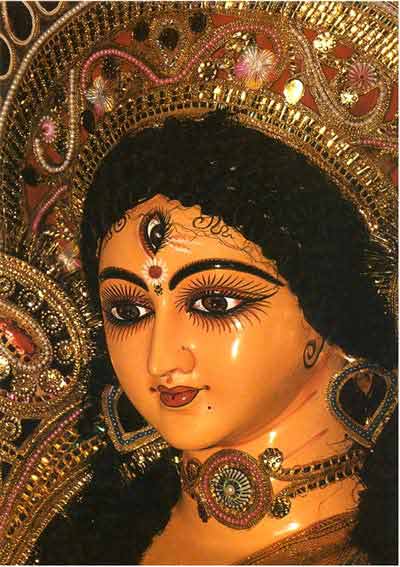
Now festival season starts with the beginning of Navratras ( Nine day festival of Maa Durga) It is believed that during the Navratri, Goddess Durga descends on earth to rid it of the demons and blesses her devotees with happiness and prosperity. Navratras in 2009 begins on 19th September 2009 and ends on 27th September 2009
Ramlila

The life and values of Lord Rama is the best lesson to be learnt in one’s life and especially to Hindus Ramlila remains the best visual treat and learning experiences in life. It is observed every year in the month of September- October.
Ramlila is a dramatic folk re-enactment of the life of Lord Ram, ending up in ten day battle between Lord Ram and Ravan, as described in the Hindu religious epic, the Ramayana. A tradition that originates from the Indian subcontinent, the play is staged annually often over ten or more successive nights, during the auspicious period of 'Sharad Navratras', which marks the commencement of the Autumn festive period, starting with the Dussehra festival. Usually the performances are timed to culminate on the festival of Vijayadashami day, that commemorates the victory of Lord Ram over demon king Ravana, when the actors are taken out in a procession through the city, leading up to a mela ground or town square, where the enactment of the final battle takes place, before giant effigies of Ravana, his brother Kumbhakaran and son Meghanath are set fire, and coronation or abhisheka of Rama at Ayodhya takes place, marking the culmination of festivities and restoration of the divine order.
Dusshera

The tenth day after Navratri is called Dussehra, on which number of fairs are organized throughout the northern India, burning effigies of Ravana.It is also called “Vijayadashmi” as this day marks the victory of Lord Rama over Ravana. VijayaDashami is considered to be an auspicious day for the Indian householder, on which he worships, protects and preserves 'Shakti' (power). According to Scriptures, by worshipping the 'Shakti' on these nine-days the householders attain the threefold power i.e. physical, mental and spiritual, which helps him to progress in life without any difficulty.Dussehra in 2009 is on Monday, the 28th of September.
Karvachauth

Karva Chauth is observed by married women (suhagini) for ensuring wedded bliss and wishing long life for their husbands and children. A married woman who observes this vrat is called ‘Saubhagyavati’ . It is generally celebrated in North India. This festival is now becoming Bigger and bigger day by day.
Fantastic heena designs is applied on the hands and when married ladies dress up exactly as bride, all the husbands feel like newly wed bridegroom.
The fast is observed during the month of Kartik on the fourth day of Krishna Paksha (descending moon). This generally falls in the month of October. This year the festival of Karva Chauth is on October 8, 09.
Diwali

As per Hindu calendar, the five day festival of Diwali is centered on the new moon day that ends the month of Ashwin and begins the month of Kartika, beginning on the 13th day of the dark half of Ashwin (Ashwin 28th) and ending on the 2nd day of the bright half of Kartika (Kartika 2nd). The main day of celebration varies regionally
In Hinduism, across many parts of India and Nepal, it is the homecoming of Rama after a 14-year exile in the forest and his victory over the Ravana.[4] In the legend, the people of Ayodhya (the capital of his kingdom) welcomed Rama by lighting rows (avali) of lamps (dĭpa), thus its name: dīpāwali. Over time, this word transformed into Divali in Hindi and Dipawali in Nepali, but still retained its original form in South and East Indian Languages.
In Jainism, Divali marks the attainment of nirvana by Mahavira on 15 October, 527 BC.
Divali has been significant in Sikhism since the illumination of the town of Amritsar commemorating the return of Guru Har Gobind Ji (1595-1644), the sixth Guru of Sikhism, who was imprisoned along with 56 other Hindu kings at Fort Gwalior by Emperor Jahangir.After freeing the other prisoners, he went to the Darbar Sahib (Golden Temple) in the holy city of Amritsar, where he was welcomed happily by the people who lit candles and divas to greet the Guru. Because of this, Sikhs often refer to Diwali also as Bandi Chhorh Divas - "the day of release of detainees." Diwali in 2009 is on Saturday, the 17th of October
Bhai Dhuj
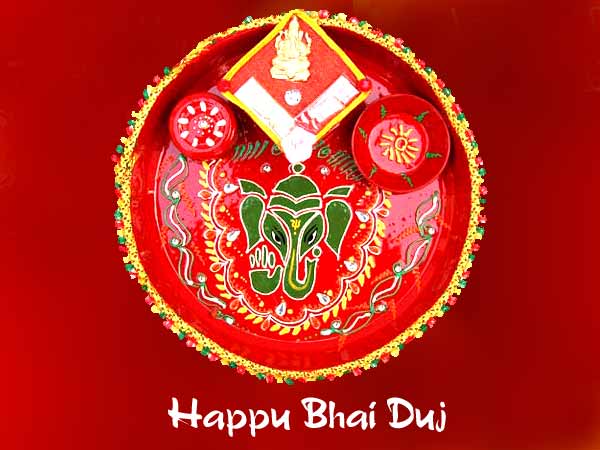
The fifth day of Deepavali or Diwali is celebrated as Bhaiya Dooj, popularly know as Bhai Dooj. The name itself denotes the day of the festival i.e it falls on Dooj, the second day after the new moon. This day Yamaraj went to his sister's house who put an auspicious mark on his forehead for his welfare. Thus, on this day sisters perform puja for their brothers safety and well being. Brothers in return give gifts to their sisters as a token of love. Bhai Duj in 2009 falls on Mon, Oct 19, 2009
Christmas

Every year more than 400 million people celebrate Xmas around the world -- that makes Xmas one of the world’s biggest religious and commercial festivities. In approximately year 300 A.D., the birthday of Jesus was determined to be on December 25, the day that has been celebrated from then till this very day. The celebration on the 25th of December starts with Christmas Eve, the evening of December 24.
The religious festival is originally a blend of pagan customs. The Romans held a festival on December 25 called Dies Natalis Solis Invicti, i.e. "the birthday of the unconquered sun.". Pagan Scandinavia celebrated a winter festival called Yule, held in late December to early January. However, it is uncertain exactly why December 25 became associated with the birth of Jesus since the Old Testament doesn’t mention a specific date of the event.
Subscribe to:
Posts (Atom)
-
The festival Dhoom Starts in September 2009 and ends in December 2009 Durga Puja Now festival season starts with the beginning of Navratras ...
-
 My Unspoken words My many words go unspoken, While I sit with you. My many moments go fade, while changing all red in blue. Even I ...
 -
 Ingredients 160g SR flour 3 eggs 100ml olive oil 120 ml milk 100 g grated cheese (cottage cheese) Salt & pepper to taste 30...
